


Contact us!     1-877-355-8012  /  info@vielight.com

Vielight Logo
0

Your cart is currently empty.

Vielight Shop
0

Your cart is currently empty.

Vielight Logo
0

Your cart is currently empty.

Alzheimer’s Disease and Brain Photobiomodulation | Clinical Results with Vielight Neuro

This article is based on published independent Alzheimer’s research conducted with the Vielight Neuro Gamma by the University of California

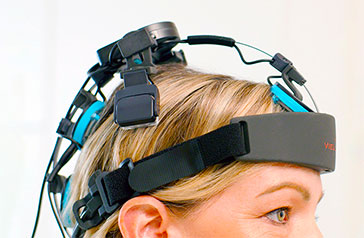
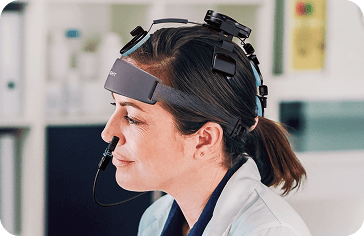
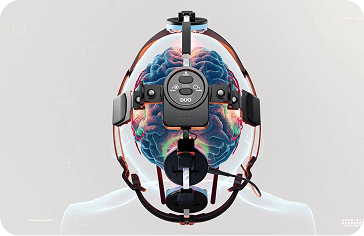
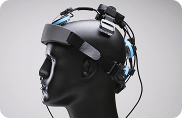
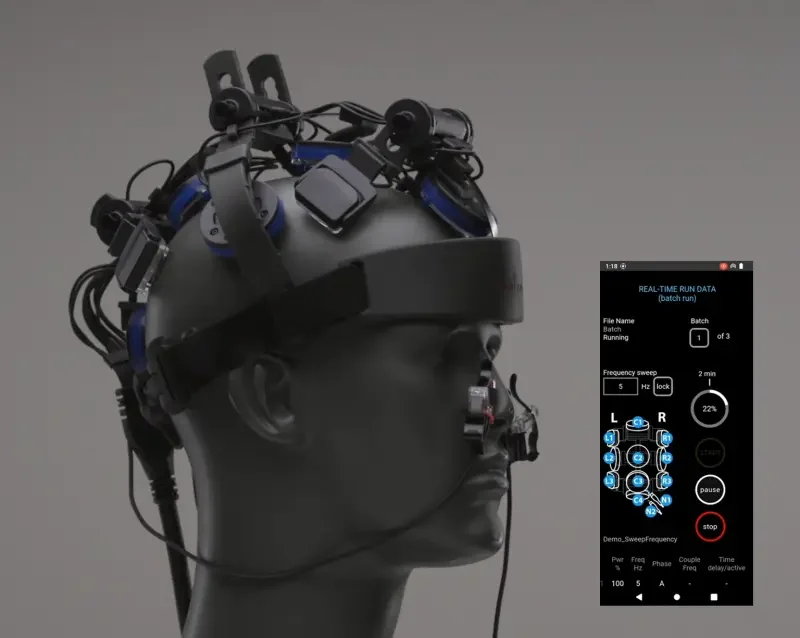
Vielight Neuro Gamma

This article is provided for educational purposes and summarizes published clinical research with the Vielight Neuro in populations that include people with dementia/Alzheimer’s disease. The Vielight Neuro is a general wellness device. It is not cleared or approved by the U.S. FDA to diagnose, treat, cure, mitigate, prevent, or manage Alzheimer’s disease.

UCSF Imaging Study: Vielight PBM in Alzheimer’s Disease

In 2017, a previous landmark study using the Vielight Neuro Gamma published by researchers from Harvard Medical School and Boston University reported that patients with dementia experienced significant improvements in memory, mood, and sleep after using near-infrared light therapy.

While these results were promising, they left a critical question: What was actually happening inside the brain?

Dr. Linda Chao, a Professor of Radiology and Psychiatry at UCSF, sought to answer this. With her background in brain imaging, she understood that for these cognitive improvements to be valid, there should be a measurable biological change in the brain’s “wiring” and blood flow.

Read the full Alzheimer’s Disease published study with the Vielight Neuro here: Link

The University of California SF's Investigation

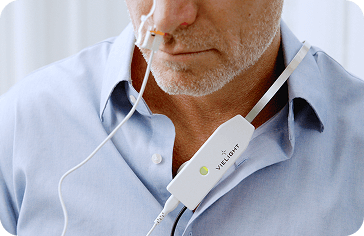
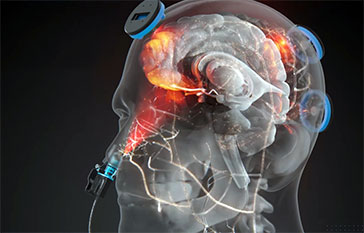
In 2019, Dr. Linda Chao conducted a pilot study to verify the earlier Harvard/BU findings through a more rigorous lens, utilizing the Vielight Neuro Gamma (810nm, pulsed at 40Hz) on dementia patients while utilizing fMRI to see what’s going on from biological perspective with intranasal-transcranial photobiomodulation (itPBM).

The Data: Comparing PBM to "Usual Care"

Dr. Chao monitored two groups over 12 weeks: one receiving Brain Photobiomodulation (PBM) and a control group receiving “Usual Care.” The data showed a distinct gap between the two groups:

  • Cognitive Performance (ADAS-cog): The PBM group showed an average improvement of 4.8 points on the ADAS-cog scale. In contrast, the control group showed a slight decline (an increase of 0.8 points).

  • Behavioral Health (NPI-FS): This scale measures distress, anxiety, and agitation. The PBM group saw a massive 22.8-point reduction in these symptoms, while the control group’s symptoms actually worsened by 5.3 points.

The Radiologist’s Perspective: What the MRI Revealed

As a radiologist, Dr. Chao’s most significant contribution was looking “under the hood” using advanced MRI techniques (Arterial Spin Labeling). She discovered that the light therapy wasn’t just helping patients feel better; it was physically altering their brain function:

  1. Increased Blood Flow: MRI scans showed significantly increased cerebral perfusion (blood flow) in the brain. This meant more oxygen and nutrients were reaching the areas most affected by Alzheimer’s.

  2. Strengthened Connectivity: The scans revealed improved “functional connectivity” between the posterior cingulate cortex and the hippocampus—the region of the brain responsible for forming new memories.

  3. The Default Mode Network: The study confirmed that the 40Hz light pulses helped synchronize the Default Mode Network (DMN), the brain’s internal communication system that often “goes dark” in Alzheimer’s patients.

The Radiologist’s Perspective: What the MRI Revealed

As a radiologist, Dr. Chao’s most significant contribution was looking “under the hood” using advanced MRI techniques (Arterial Spin Labeling). She discovered that the light therapy wasn’t just helping patients feel better; it was physically altering their brain function:

  1. Increased Blood Flow: MRI scans showed significantly increased cerebral perfusion (blood flow) in the brain. This meant more oxygen and nutrients were reaching the areas most affected by Alzheimer’s.

  2. Strengthened Connectivity: The scans revealed improved “functional connectivity” between the posterior cingulate cortex and the hippocampus—the region of the brain responsible for forming new memories.

  3. The Default Mode Network: The study confirmed that the 40Hz light pulses helped synchronize the Default Mode Network (DMN), the brain’s internal communication system that often “goes dark” in Alzheimer’s patients.

Conclusion

By combining the clinical observations from Harvard and BU with the imaging expertise of UCSF, Dr. Chao provided the scientific community with a clearer picture. We now know that near-infrared light is more than just a symptomatic treatment; it is a biological intervention that improves the brain’s energy supply and communication pathways.

Research context & limitations: The studies referenced here include pilot and exploratory research. Findings reported in small studies may not generalize to broader populations, and individual results can vary. The comparison described on this page includes a “usual care” group; it is not presented as a sham-device clinical trial on this page.
Reported score changes (e.g., ADAS-cog, NPI measures) reflect group averages reported by study authors over the stated study period and do not predict individual outcomes. Larger, well-controlled trials are needed to confirm efficacy, optimal protocols, and durability of effects.


References:

  • Saltmarche, A., et al. (2017). Significant Improvement in Cognition in Mild to Moderately Severe Dementia Cases Treated with Transcranial Plus Intranasal Photobiomodulation. Photomedicine and Laser Surgery (Harvard/BU Study).

  • Chao, L. L. (2019). Brain Photobiomodulation for Alzheimer’s Disease: Case Study and Pilot Clinical Results. Photobiomodulation, Photomedicine, and Laser Surgery (UCSF Study).

This article was written by

Dr. Mahroo Karimpoor

Vielight | Research Scientist

Mahroo is investigating the potential beneficial effects of photobiomodulation in elderly cognition and brain aging. She also researches the effects of photobiomodulation on neuro-oscillations.

MSc Tissue Engineering and Biomaterial Sciences, University College London, UK
PhD Pharmaceutical and Biomaterial Science, University College London, UK
Meet the author
0