


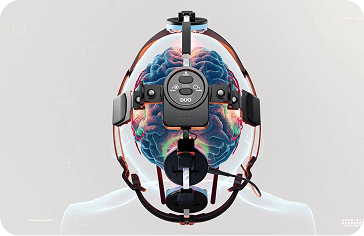






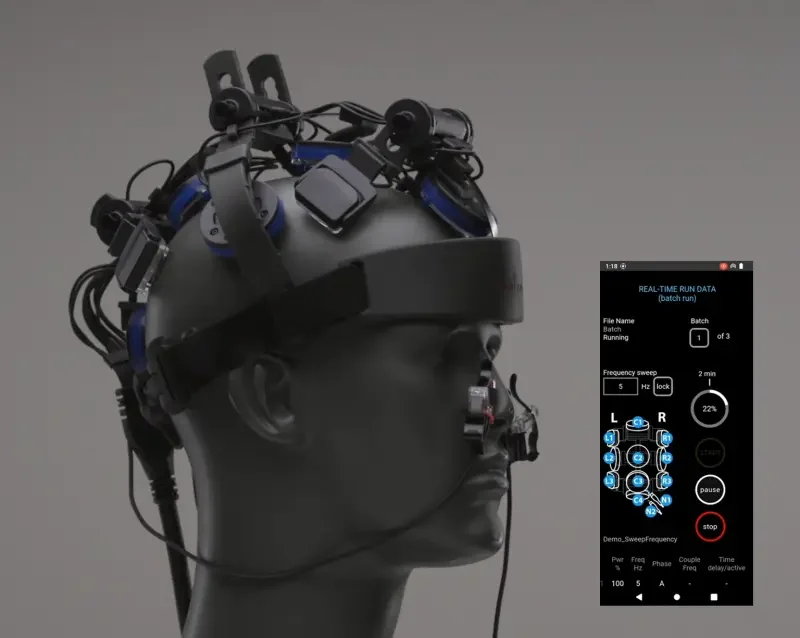

Baycrest Hospital | Vielight itPBM improves Brain Fluid Dynamics (MRI)

Key Takeaways:
- Real-time Modulation: Vielight Photobiomodulation (PBM) induced immediate changes in CSF dynamics within just 4 minutes of stimulation.
-
20x Efficiency: Vielight Intranasal PBM achieved results equivalent to Vielight transcranial PBM while using approximately 1/20th of the power density.
-
Universal Efficacy: The intranasal route bypasses the melanin barrier, which was shown to reduce efficacy in transcranial applications for darker skin tones.
- Read the full published paper here: Link
This study from Baycrest Hospital with 45 participants highlights a significant breakthrough in neurotechnology using Vielight Photobiomodulation (PBM).
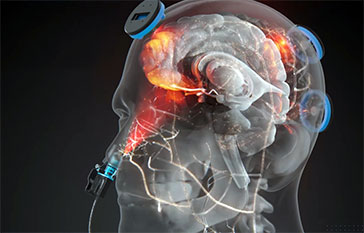
The glymphatic system is the brain’s waste clearance center. It utilizes cerebrospinal fluid (CSF) to wash away neurotoxic waste products, such as amyloid-beta. A groundbreaking new study published in Brain Stimulation has provided compelling quantitative evidence that Vielight’s intranasal-transcranial photobiomodulation (itPBM) technology can modulate these dynamics in real-time.
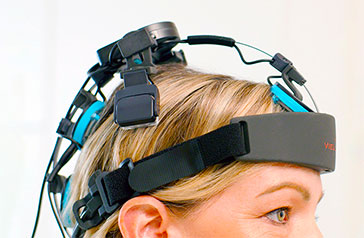
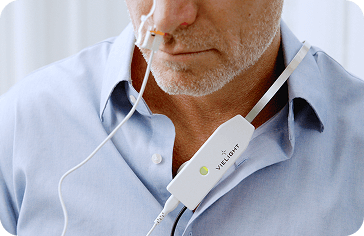
The study, conducted by Baycrest Hospital and Vielight technology on 45 healthy adults (aged 20–32) , compared the effects of Transcranial PBM (tPBM) applied to the forehead against Intranasal PBM (iPBM). The data highlights the remarkable efficiency of the intranasal delivery channel—a core component of Vielight’s patented technology.
Why this matters for Alzheimer’s disease
Alzheimer’s disease is characterized in part by the accumulation of neurotoxic proteins such as amyloid-beta and tau, and multiple lines of research implicate impaired brain “waste-clearance” pathways (including glymphatic/CSF-mediated clearance) as a factor associated with neurodegenerative risk and progression. Because glymphatic activity is closely linked to CSF dynamics and is influenced by physiological states such as sleep, interventions that measurably modulate CSF movement may warrant further investigation for relevance to Alzheimer’s-related mechanisms.

Measurable Changes in Fluid Dynamics
Using blood-oxygenation level-dependent (BOLD) functional MRI, the researchers observed distinct changes in brain fluid dynamics during the 4-minute stimulation windows.
The stimulation resulted in a 0.3% average increase in the fMRI signal in upper CSF regions. While this percentage sounds small, the researchers calculated that this corresponds to a physical CSF volume increase of between 3% and >20%.
Simultaneously, the “inflow” regions showed a signal decrease consistent with a reduction in CSF inflow velocity of 30% to 120%. This suggests that PBM successfully triggered a “flushing” mechanism, likely driven by vasodilation—the widening of blood vessels which pumps fluid out of the cranium to clear waste.