


Contact us!     1-877-355-8012  /  info@vielight.com

Vielight Logo
0

Your cart is currently empty.

Vielight Shop
0

Your cart is currently empty.

Vielight Logo
0

Your cart is currently empty.

Illuminating the Brain | The Vielight Neuro’s Energy Footprint | Full Transcranial-Intranasal Footprint

Published:

The secret to how a few powerful intranasal-transcranial LEDs can impact the entire brain lies in the physics of light scattering and skull anatomy. This article contains real-time demonstrations on a real human skull with Vie-LED technology.

What “energy footprint” means

When light energy enters the head through a single point, it doesn’t stay as a tiny dot. As it passes through skin, skull, the fluid around the brain (CSF), and cortex, multiple scattering events spread and redirect the beam. The resulting energy footprint is broad, overlapping fields of light fluence.

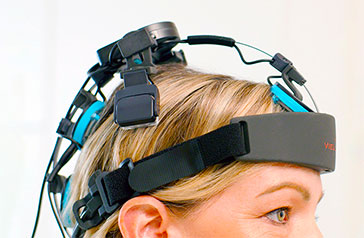
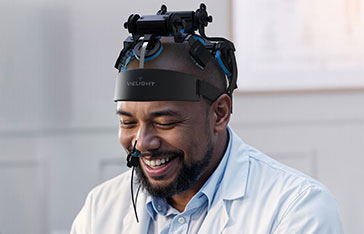
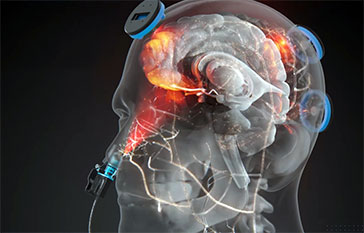
We engineered the Neuro 4’s geometry to turn ‘points of light’ into ‘halos’ of energy. These halos overlap, ensuring full transcranial coverage with a focus on the Default Mode Network (DMN) nodes. These halos are generated by Vie-LED technology, featuring the highest independently measured irradiance in commercially available brain photobiomodulation devices. This is why five VieLED modules can produce an effect that is effectively full‑transcranial, with a focus on the DMN.

Plain‑English summary: Five specialized LEDs ≠ five dots. Physics turns five dots into five large, overlapping halos that cover the cortex, with positioning that accentuates DMN hubs.

Full transcranial demonstration

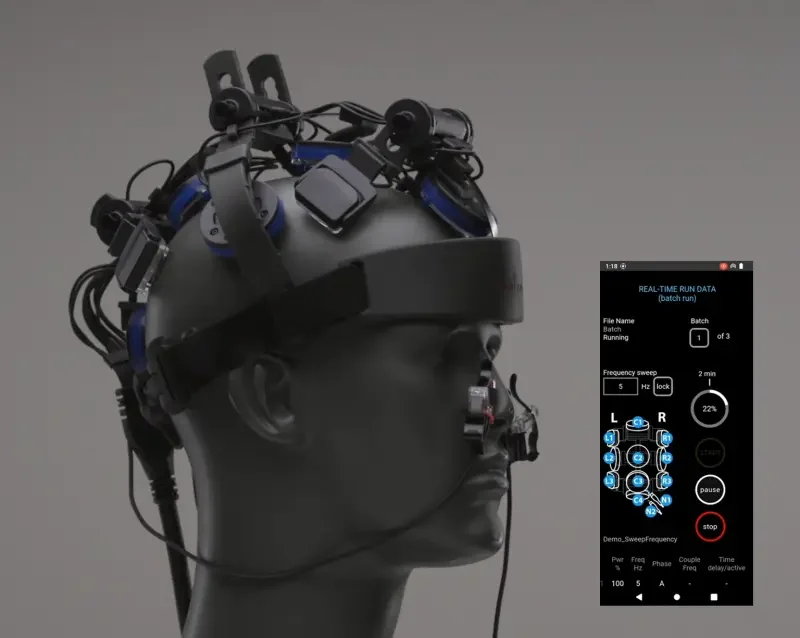
The Vielight Neuro Pro 2, with twelve higher-powered VieLED modules, produces a world-leading LED irradiance. It has the ability to target more networks individually for precision-based photobiomodulation.

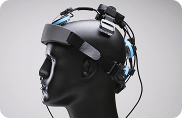
Vielight Neuro 4 | How Five Vie-LEDs provide full Transcranial Coverage

This footage utilized a CMOS-based camera to detect and translate 810nm (invisible to the human eye) fluence from the Vielight Neuro 4 through a human skull.


This real life footage demonstrates the Vielight Neuro 4 generates full transcranial coverage with just 5 Vie-LED modules.

1) Skull scattering amplifies coverage. The skull’s (bone) mineralized matrix is highly uneven. Incoming photons undergo Mie‑dominant scattering, so a narrow beam entering bone emerges as a wide-spread halo with a concentration on contact points.

2) Skin/scalp. The scalp consists of collagen fibers, fat, and small blood vessels—each of these components absorb, scatter and refract light energy.

3) Cerebrospinal fluid (CSF) scatters photons. The liquid which the brain floats in, cerebrospinal fluid (CSF) also scatters light energy, helping spread light energy sideways, so it fans out over the tops of the brain’s folds and into nearby areas.

4) Overlapping light halos → whole‑cortex coverage. The Vielight Neuro 4’s VieLEDs are strategically positioned so their broadened halos overlap across the brain. The result is full coverage but with a focus on the Default Mode Network (DMN).


Bottom line: It may look like “just five super powerful LEDs,” but their collective energy footprint blankets the entire cortex with a focus on the DMN where hubs are densest.

DMN 1 - Figure 1: The DMN in cerebral brain scans in different mental states.

DMN‑Focused Geometry (With full transcranial PBM)

A dysfunctional Default Mode Network (DMN) is a central hallmark of several neurological and psychiatric conditions. Research consistently links impaired DMN connectivity to the progression of Alzheimer’s and Parkinson’s, as well as mood disorders like depression and anxiety, where the brain’s ‘resting state’ becomes fragmented or overactive.

In traumatic brain injuries (TBI), the DMN is often disrupted—its connections can become weaker or noisy, and the brain struggles to switch off the DMN and switch on task networks, which maps to brain-fog, slowed thinking, fatigue, and problems with attention and memory. Which is why improving functional connectivity of the DMN is so important in research.

For creativity, the DMN supplies the raw material—spontaneous associations, memory recombination, daydreaming—while the salience and executive networks pick, refine, and test those ideas; the healthiest pattern isn’t a constantly high DMN, but flexible switching between DMN and task networks, which predicts better divergent thinking and creative output.

The Vielight Neuro 4’s layout concentrates on these hubs so the diffuse halos focus where the DMN nodes reside, while still spreading energy into frontal, temporal, and lateral parietal cortices. This DMN‑weighted strategy aligns with the Neuro 4’s intent to support large‑scale network dynamics while maintaining whole‑brain coverage.

Vielight Neuro Pro 2 | Stronger Irradiance and Versatility

This footage utilized a CMOS-based camera to detect and translate 810nm (invisible to the human eye) from the Vielight Neuro Pro 2 fluence through a human skull.


The Vielight Neuro Pro 2 extends the principles described above by combining 12 VieLED modules with higher‑intensity output with module‑level control to realize stronger full‑transcranial PBM with network‑specific emphasis.

  • Overcoming Physical Barriers: With 12 ultra-powerful LEDs, the Pro 2 ensures that factors like hair density or bone thickness never get in the way of your results.

  • Targeted Brain Training: Use the 12 programmable modules to “brighten” specific brain networks. Whether you are focusing on memory (DMN) or focus (Frontoparietal), the energy goes exactly where you need it most.

  • Smarter Neuromodulation: Our app-driven interface comes with 9 powerful preset procols and almost endless customization options: module-level control, frequency & pulsing parameters, irradiance, sweeps, phase-control etc.

The Intranasal Channel: Reaching Ventral Brain Structures

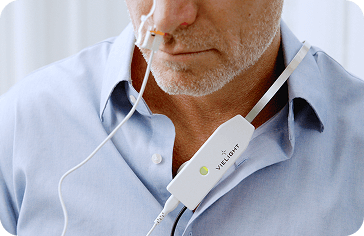
While transcranial LEDs cover the top of the brain, our intranasal module completes the circuit from below, covering both the top and bottom sides of the brain.

Vielight intranasal technology has been clinically proven to be 20x more effective than transcranial-only helmets in an MRI-based n=45 clinical study by Baycrest Hospital.


Intranasal brain PBM (iPBM) utilizes a biological ‘shortcut’ to the brain. By delivering Near-Infrared (NIR) energy through the cribriform plate—a naturally thin and porous bone at the roof of the nasal cavity—light can bypass the thickest parts of the skull.

This cribriform ‘window’ provides a direct, short-distance path to the brain’s underside (the ventral frontal region), reaching deep targets that are typically shielded from transcranial light.

Transcranial (tPBM) + Intranasal (iPBM) brain photobiomodulation = Intranasal-transcranial PBM (itPBM) and is unique to Vielight.

Plain‑English summary: Five specialized LEDs ≠ five dots. Physics turns five dots into five large, overlapping halos that cover the cortex, with positioning that accentuates DMN hubs.

Anatomy of the cribriform plate

The Strategic Benefits of Intranasal itPBM

By targeting the ventral (underside) regions of the brain, the intranasal route provides essential benefits that transcranial light alone cannot reach:

  • Emotional Resilience: Direct stimulation of the ventromedial prefrontal cortex (vmPFC) helps regulate the brain’s “emotional thermostat,” supporting better mood stability and stress management.

  • Enhanced Decision-Making: By energizing the orbitofrontal cortex, the device supports the areas of the brain responsible for social intuition, “gut feelings,” and complex reward-based decision-making.

  • Olfactory System Support: It provides direct energy to the olfactory bulbs and tracts, which are not only responsible for your sense of smell but also serve as a vital gateway to the brain’s memory centers (the hippocampus).

  • Dorsal-to-Ventral Continuity: This creates a “top-to-bottom” energy circuit, ensuring that the entire frontal lobe is activated as a single, cohesive unit rather than just the surface-level cortex.

  • Access to “Shielded” Structures: It bypasses the thicker parts of the frontal skull to reach deep-seated targets at the brain’s base, ensuring no critical region is left “in the dark.”

  • Optimized Network Connectivity: By stimulating both the top (transcranial) and bottom (intranasal) hubs, it facilitates better “cross-talk” between brain networks, leading to sharper focus and better mental clarity.

  • Systemic Circulation: Because the nasal cavity is rich in capillaries, intranasal delivery also provides a systemic benefit by irradiating the blood as it circulates, supporting overall brain-vascular health.

The intranasal channel is more than an add-on; it is a strategic ‘underside’ route that completes a 360-degree energy footprint, reaching the deep brain structures that transcranial light cannot.

Feature Vielight Neuro 4 Vielight Neuro Pro 2
Number of LEDs 5 high-power VieLED modules 12 ultra-high-power VieLED modules
Primary Focus Default Mode Network (DMN) Multi-network (DMN, Salience, Executive, etc.)
Intranasal Access Single Intranasal pathway Dual Intranasal pathways
Control & Interface Simple, “Plug-and-Play” Neuro Pro App (Smartphone/Tablet)
Customization Fixed session protocols Fully programmable (Frequency, Phase, Duty Cycle)
Brain Coverage Whole-cortex via light scattering High-intensity precision & network targeting
Power Intensity Industry standard Highest surface irradiance available
Best For Daily brain wellness & DMN support Performance, research, & personalized protocols

Vie-Lab Demo | Penetration Through a Human Skull | Vielight Neuronic Suyzeko

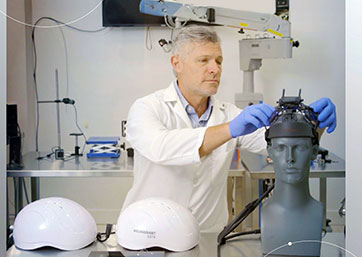
At the Vielight photonics lab, we conduct rigorous irradiance test to measure the actual penetration of Near-Infrared (NIR) light energy through a real human skull and an optical skin phantom. This experiment is designed to give practical application to the recent irradiance reports published by the PBM Foundation, conducted in partnership with Optronic Lab and Megalab.

For this experiment, we used the same methodology utilized by Megalab in their 2024 testing reports but take it one step further. We simulate real-world biological barriers using a human calvaria (skull) and a synthetic skin phantom to measure exactly how much light energy reaches the brain. We also utilize a CCD camera to generate a live fluence map, visualizing the heat and light dispersion through the skull in real-time.

What this is and isn’t: The smartphone method is a qualitative, relative visualization – useful for pattern‑tracking and comparative intensity across positions. It is not a calibrated dosimetry system and doesn’t replace formal optical modeling or in‑tissue fluence measurements.

A Quick Tour of the Physics: How Light Travels Through the Head

To understand the “energy footprint,” we have to look at how light interacts with the various layers of the head. Each layer acts as a natural lens or diffuser:

  • The Scalp & Skull (The Diffuser): These layers have high “reduced scattering.” When a beam hits the bone, it doesn’t stay narrow; it fans out into a broad, diffuse halo.

  • The Protective Layers & Fluid (The Redirectors): While Cerebrospinal Fluid (CSF) is clear, the irregular surfaces of the brain’s “envelope” (the dura and arachnoid layers) act like mirrors and prisms. They redirect and redistribute light sideways, allowing it to spread across the folds (gyri) of the brain.

  • The Gray Matter (The Destination): Once the light reaches the cortex, “forward-biased scattering” continues to smooth and widen the footprint, ensuring the energy is distributed evenly across the neural tissue.

The Result: These layers work together to transform a single point of light into a “stacked” field of energy—blanketing the cortex while concentrating power where we want it most (like the DMN hubs).

Limitations & Next Steps

  • Qualitative visualization: CMOS camera capture provides relative intensity, influenced by sensor IR filtering and auto‑exposure. Future work can add spectral characterization and fixed‑exposure protocols.
  • Heterogeneity: Skull thickness, diploë content, sinus cavities, and CSF thickness vary across individuals, subtly reshaping footprints. Ongoing Monte Carlo modeling and in‑vivo NIRS/NIRI can refine priors.
  • Dosimetry bridge: Linking surface power, fluence rate at depth, and biologic response remains an active engineering task. Calibrated phantoms and paired imaging can tighten these relationships.

Conclusion

The Vielight Neuro architecture proves that sophisticated engineering is about more than just numbers—it is about understanding the physics of the human body.

By leveraging tissue optics, we have turned five high-power LEDs into a unified, brain-wide energy footprint with a purposeful focus on the Default Mode Network.

When paired with the intranasal channel’s ‘underside’ access, the result is a complete dorsal-to-ventral pathway. As our skull-based visualizations show, this is not just light; it is a meticulously designed map for total-brain photobiomodulation.

This article was written by

Dr. Nazanin Hosseinkhah

Vielight | Biomedical Physicist

Nazanin manages brain imaging research projects with photobiomodulation in collaboration with major research organizations, such as the University of Alberta and Baycrest Hospital.

PhD in Medical Biophysics, University of Toronto
Meet the author
0