





Vielight Supports the PBM Foundation’s Device Testing Portal for Transparency and Safety
Advancing Transparency and Safety in PBM Devices
At Vielight, we support the PBM Foundation’s device testing portal‘s goal to promote specification transparency, safety, and accuracy in commercial photobiomodulation (PBM) devices.
Addressing Industry Challenges
The lack of standardized regulation in PBM device parameter measurement leads to frequent inaccuracies, with reported specifications often overstated or understated. This creates problems for both researchers and consumers.
- Researchers rely on accurate data to select parameters for studies and ensure efficient use of research funding.
- Consumers need precise specifications to make informed purchasing decisions.
A high Irradiance Requirement
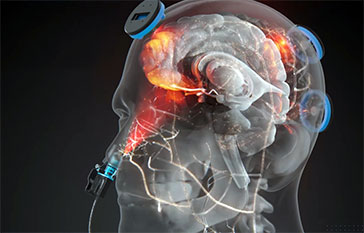
In a published review study of over 2133 brain photobiomodulation studies, from which 97 studies were included, the average irradiance or power density was usually used at around 250 mW/cm2.
Independent Testing for Accuracy
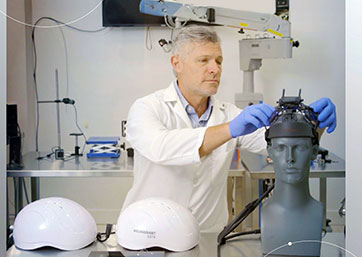
To address these concerns, the PBM Foundation has partnered with Optronics Lab and Megalab Group Inc., specialists in spectroscopic measurement services. These partnerships focus on establishing consistent LED testing protocols, rigorous methodologies, and transparent reporting.
Why Accurate Measurement Matters
Photobiomodulation research is device-specific due to key variables like wavelength, irradiance, and device form factor. Accurate parameter reporting is crucial to replicate therapeutic effects and understand treatment conditions — much like pharmaceutical testing.
Case Studies on Specification Transparency
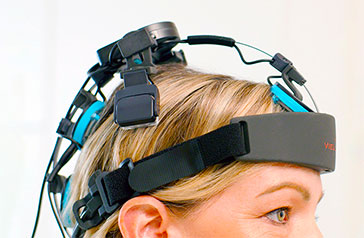
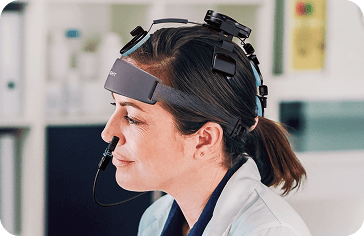
As part of their testing program to standardize irradiance reporting, the PBM Foundation benchmarked the Vielight Neuro 3 against two PBM helmets — the Suyzeko NIR helmet and the Neuronic Neuradiant — in collaboration with two photonics engineering firms. Both MegaLab and Optronic Lab conducted independent tests, yielding highly consistent and replicable results.
Independent tests conducted by Optronics Laboratories and MegaLab highlight the need for precise measurements:
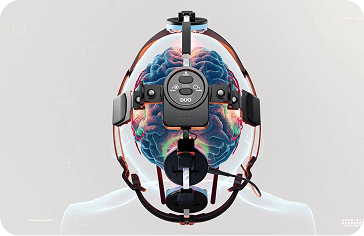
- Optronics Laboratories tested the Vielight Neuro Duo, Neuronic Neuradiant 1070, and Suyzeko NIR Helmet using a calibrated OL 770VIS/NIR spectroradiometer. Each device was tested as instructed in its manual to ensure real-world accuracy.
- Results are also available in the published report and published case study.

| Source | Independently measured irradiance | Declared irradiance | Manufacturer | % of Natural Sunlight’s Irradiance |
|---|---|---|---|---|
| Vielight Neuro (Vielight) | 200-400 mW/cm2 | 100 mW/cm2 | Vielight, Canada | 200-300% |
| Neuradiant 1070 (Neuronic) | ≈9 mW/cm2 | 20-40 mW/cm2 | Suyzeko, China (Private-labelled) | ≈9% |
| Suyzeko PBM Helmet (Suyzeko) | 5 mW/cm2 | 20-40 mW/cm2 | Suyzeko, China | 5% |
| Natural Sunlight | 100 mW/cm2 | 100% |
- MegaLab tested the Vielight Neuro Duo and the Neuronic Neuradiant for accuracy.
- Results are also available in the published report.

Ensuring Device Safety
Given PBM devices’ electronic nature, there’s a risk of malfunctions or emissions. Independent bodies like TUV, SGS, and Megalab conduct safety tests to certify non-medical PBM devices as safe, following industry standards (e.g., EN 55032:2015, IEC 62471:2006).
Promoting Innovation and Quality
The PBM Foundation certifies only vendors who invest in original product development to prevent mass-produced private labeling. Certified devices must demonstrate unique design and technology.
Vielight’s Conservative Testing Approach
We adopted a conservative measurement methodology using a narrow nanometer band with a spectroradiometer. This approach mirrors the precision of lasers while ensuring the safety of LEDs, reinforcing our commitment to accurate and responsible reporting. However, we acknowledge that our approach does not accurately simulate the full spectrum approach used by Optronic Lab and MegaLab, which gives a broader and more accurate picture of the spectral profile, leading to higher irradiance values.