





36
Patents
Across the US, Canada,
Australia, Japan, Korea,
China, Taiwan and Europe.
We are the only company
with a patent for intranasal
devices.


We care about your vitality, so we want you to know exactly how our devices and the science behind them stand out from the rest.
Across the US, Canada,
Australia, Japan, Korea,
China, Taiwan and Europe.
We are the only company
with a patent for intranasal
devices.


On neurodegeneration, cognition and immunity


We are FDA-registered and Health Canada approved. We also hold medical-grade ISO13485 and MDSAP certifications.

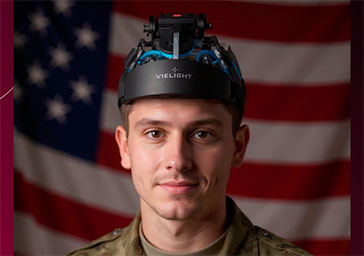
We collaborate with leading educational and healthcare institutions, as well as the US Veteran Affairs, the NCAA and professional sports teams.
Other brands:
3 Published research studies
0 Medical device appovals
Comparative information on this page as of 1st September 2024
Features |
 Irradiance
 is the concentration of light energy that lands on your scalp. This is what matters in photobiomodulation therapy.
Irradiance
Irradiance is the concentration of light energy that lands on your scalp. This is what matters in photobiomodulation therapy.
|
 Number of LEDs
You could have infinite weak LEDs that don’t generate enough light power. What matters is irradiance!
Number of LEDs
You could have infinite weak LEDs that don’t generate enough light power. What matters is irradiance!
|
 Intranasal design
We are the only company that owns the global patent for intranasal photobiomodulation devices
Intranasal design
We are the only company that owns the global patent for intranasal photobiomodulation devices
|
 Contact with scalp
|
 Comfort & Flexibility
|
 Published studies
|
 Manufacturer
|
 Price
Price
|
button
|
|---|---|---|---|---|---|---|---|---|---|
 Vielight
|
200-300% sunlight |
5 Vie-LED modules |
Best way to deliver light to the underside of the brain | Bypasses hair and enables full contact |
Modular design that ensures maximum contact |
22+ |
Patented and self-manufactured |
$2,399 |
See devices |
 Neuronic
|
≈9% sunlight |
256 |
No intranasal module | No full contact |
Non-adjustable |
2
|
Private-labeled from Suyzeko |
$3,300 |
|
 Suyzeko
|
4-5% sunlight |
256 |
No intranasal module | No full contact |
Non-adjustable |
1
|
Self-manufactured |
$3,200 |
Features |
Irradiance
|
Number of LEDs
|
Intranasal design
|
Contact with scalp
|
Comfort & Flexibility
|
Published studies
|
Manufacturer
|
Price
|
|---|---|---|---|---|---|---|---|---|
Vielight
|
200-300% sunlight |
5 Vie-LED modules |
Best way to deliver light to the underside of the brain | Bypasses hair and enables full contact |
Modular design that ensures maximum contact |
22+ |
Patented and self-manufactured |
$2,399 |
Neuronic
|
≈9% sunlight |
256 |
No intranasal module | No full contact |
Non-adjustable |
2
|
Private-labeled from Suyzeko |
$3,300 |
Suyzeko
|
4-5% sunlight |
256 |
No intranasal module | No full contact |
Non-adjustable |
1
|
Self-manufactured |
$3,200 |

In photobiomodulation, the concentration of light energy (irradiance) is what truly matters.
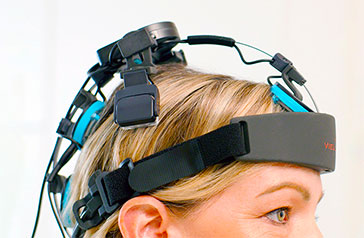
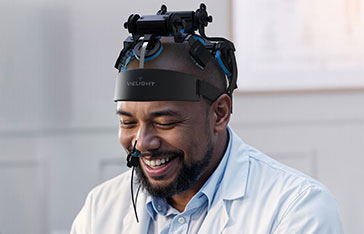
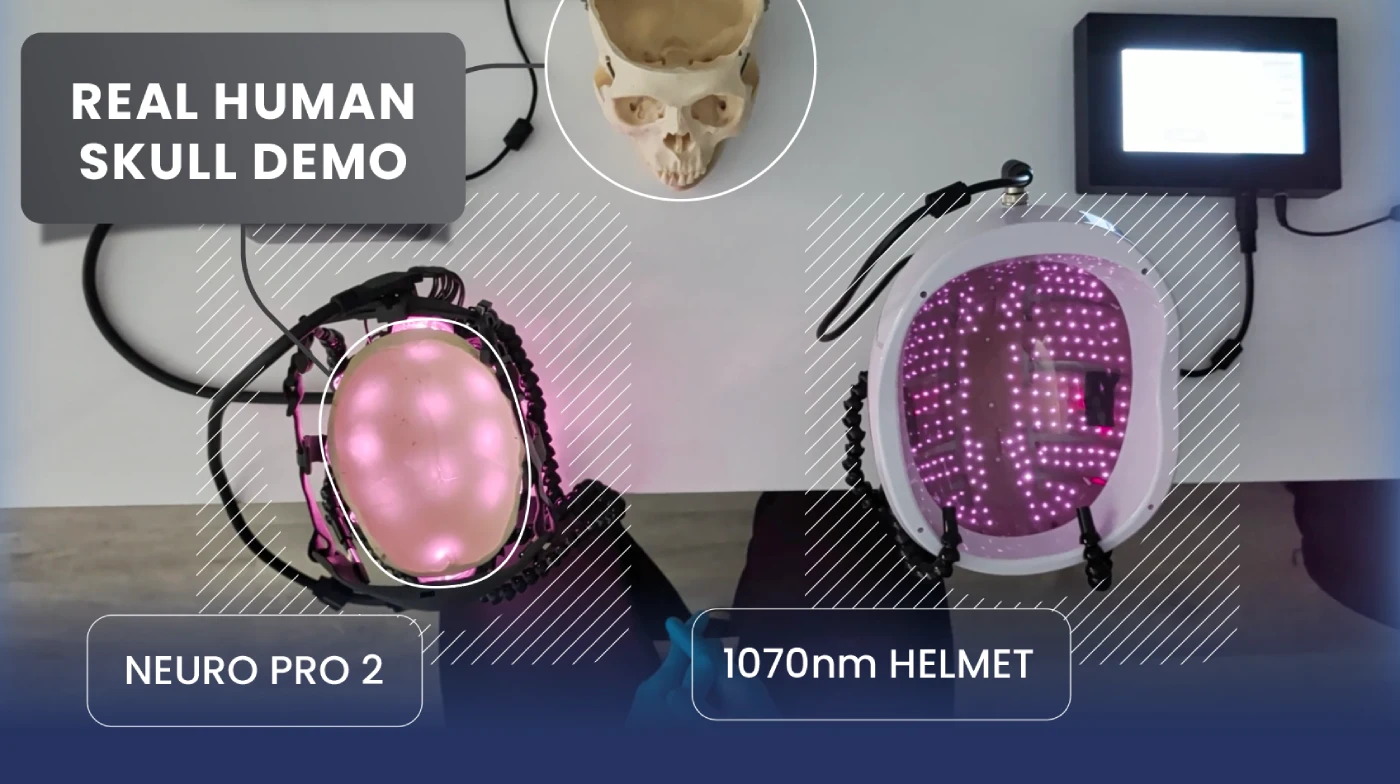
Our Vie-LED technology delivers high-intensity, laser-like energy and full transcranial coverage, surpassing the weaker irradiance of helmet-style devices.
Even with hundreds of LEDs, helmets dilute power by sharing electrical current across many diodes. This weak irradiance prevents deep penetration, reducing effectiveness.
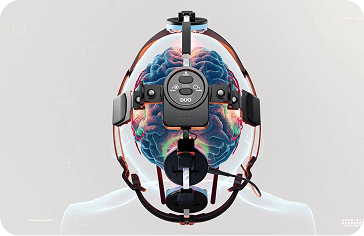
Hair further reduces effectiveness, weakening the already low light delivery of helmets. In contrast, the Neuro bypasses hair, ensuring full contact with the scalp for optimal light absorption.

Near-infrared light naturally scatters as it penetrates the skull, expanding coverage across a wider area. This allows brain photobiomodulation to require fewer, extremely powerful LEDs positioned over important brain networks.
Unlike traditional diodes, Vie-LED curved lenses focus light for optimal scalp absorption and therapeutic impact.
Strategically placed, high-intensity Vie-LEDs optimize energy delivery, ensuring deeper penetration, and uniform stimulation.
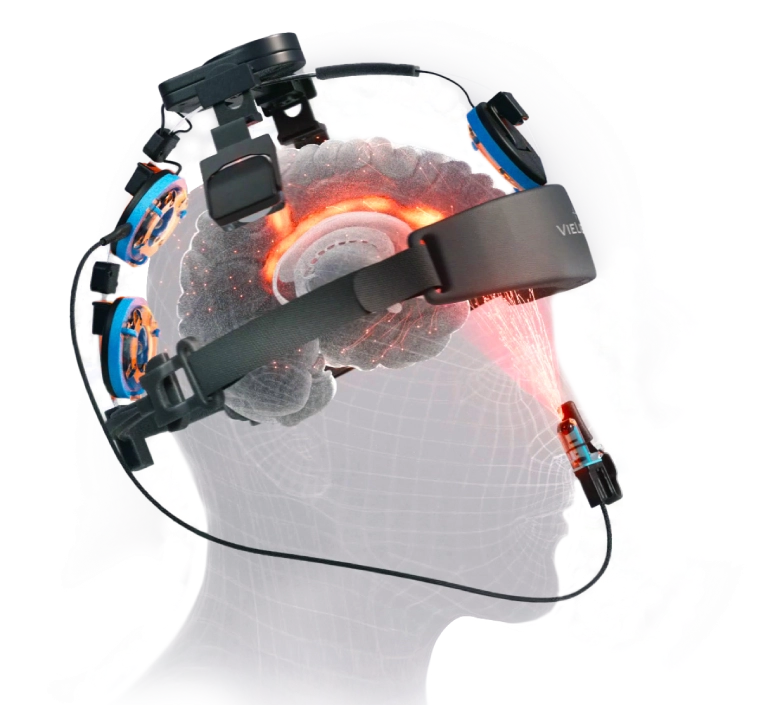
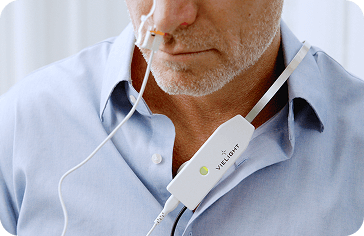
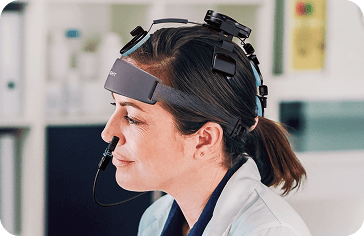
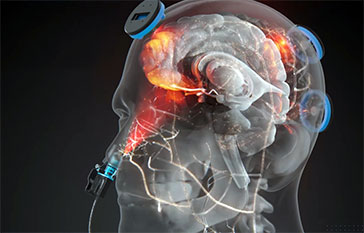
The Vielight Neuro also offers patented intranasal photobiomodulation technology.
This technology targets important brain structures in the ventral portion of the brain, including the ventromedial prefrontal cortex and the olfactory bulb.
Our patented intranasal technology is the best way to deliver near-infrared energy through the nose to the underside of the brain.
 The olfactory bulb is directly connected to the brain regions responsible for keeping long-term memories.
 The ventromedial prefrontal cortex is vital for cognitive processes.


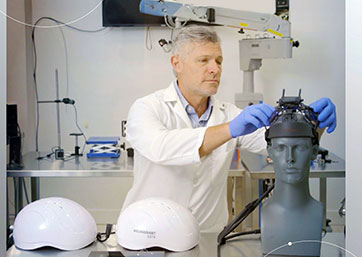
The PBM Foundation benchmarked the Vielight Neuro 3 against two PBM helmets, the Suyzeko NIR helmet and Neuronic Neuradiant twice, as case studies for their testing program to standardize irradiance reporting.
The PBM Foundation selected the two most important variables for brain photobiomodulation: Irradiance (mW/cm²) and Wavelength (nm).
They did not look at total power (mW) because total power is a poor metric. A high total power can come from hundreds of low-powered LEDs but they will not penetrate the brain adequately.